
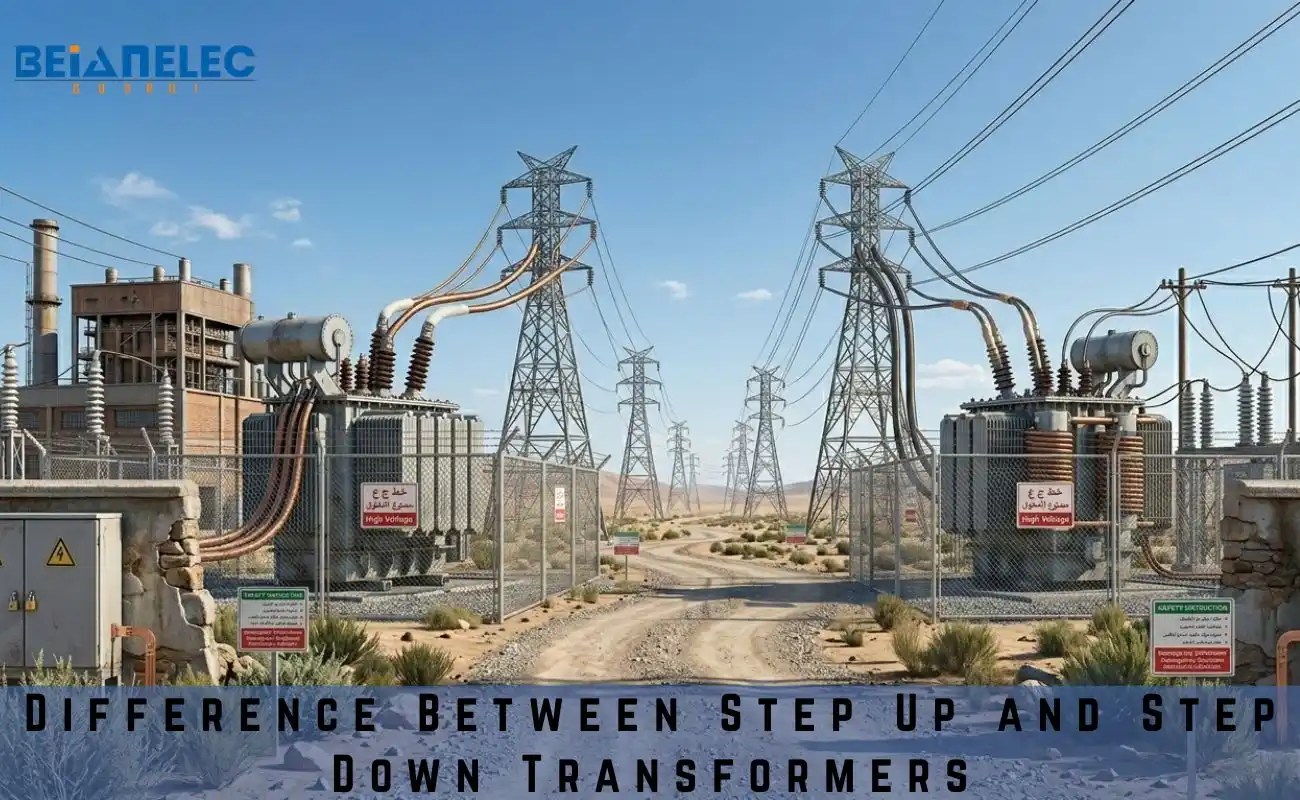
Both Step-up and step-down transformers are vital to efficient power generation, transmission, and distribution in modern electrical networks, but there is a difference between step up and step down transformers. A step-up transformer increases voltage from primary to secondary winding. Therefore, step-up transformers are used in power transmission, which allows for long-distance transmission to avoid losses. Conversely, step-down transformers decrease voltage to safe, usable levels for distribution, and for terminal end-user applications. Both transformer types are governed by electromagnetic induction.
What Is a Step-Up Transformer and How Does It Work?
A step-up transformer is an apparatus that raises voltage from primary to secondary windings while lowering current by an equal ratio. In power generation systems, these devices are utilized to increase voltage before transmission. This is critical for reducing energy loss as heat due to the resistance of the wires over long distance transmission.
The voltage induced in the secondary coil is directly proportional to the number of turns on the secondary coil. In short, if the secondary coil has a greater number of turns than the primary, it is possible to increase output voltage. This is critical in the operation of efficient power transmission systems.
Read More : difference between oil filled and dry type transformers
What Is a Step-Down Transformer and How Does It Work?
Like every transformer, they work on the principle of electromagnetic induction. The principle of operation is based on the windings ratio. A lower number of coils in the secondary winding results in lower output voltages that could be used in many applications.
Understanding the Difference Between Step Up and Step Down Transformers
| Feature | Step-Up Transformer | Step-Down Transformer |
| Voltage | Increases voltage | Decreases voltage |
| Current | Decreases current | Increases current |
| Turns Ratio | Secondary turns are higher | Primary turns are higher |
| Application | Transmission line systems | Distribution and end-use areas |
Key Technical Differences in Voltage Current and Windings
The main difference between step up and step down transformers is the relation between voltages and currents. At step-up transformers, the primary voltage is lower than the secondary voltage, and current decreases in proportion. Step-down transformers lower the voltage at the secondary side and increase current, which is necessary in end-use applications for safe power consumption.
In addition to voltage and current, winding configuration is also different. For step-up transformers, the secondary winding has more turns than the primary winding, as a result step-up transformers produce a higher voltage at the output. The reverse is true for step-down transformers.
Read More : Top Switchgear manufacturers in China
Can You Use a Step-Up Transformer as a Step-Down
Although there is a difference between step up and step down transformers, but a step-up transformer can function as a step-down transformer when used in reverse, as transformers are essentially reversible devices. When an input voltage is supplied at the secondary winding that is typically in the primary position, the transformer will step down voltage as opposed to stepping it up. This is a function of voltage transformation related to the winding turns ratio.
However, there are practical issues that must be addressed and make sure that a transformer’s specifications allow reverse operation before using it in that manner.
Common Mistakes When Choosing a Transformer for Industrial Projects
In industrial projects, the wrong choice of transformer can lead to inefficiency, safety hazards, and higher operational costs due to these factors.
- Load Calculation errors: Failing to thoroughly estimate current and future load requirements.
- Requirements Ignorance: Input and output voltage levels not being suitable for the application.
- Installation conditions like location, temperature, and humidity are not being considered.
- Efficiency Ratings Neglect: Selecting the transformer with poor efficiency will result in high losses and operating costs.
- Cooling Requirements Misestimation: Usage of inadequate cooling for the operational situation.
- Standard Neglect: Ignoring IEC or local required regulations.
Read More : Best Substation Transformer Manufacturers
How to Choose the Right Transformer for Your Project
There are many parameters that must be considered while choosing the right transformer
- Identify voltage: Match input and output voltage levels and systems.
- Assess load demands: Current and future load demands should be within the transformer’s capacity.
- Factor in installation environment: The transformer’s type will largely depend on whether the installation is indoor or outdoor.
- Choose a suitable cooling method: Efficiency and heat dissipation depend on appropriate cooling.
- Look into efficiency and losses: Greater efficiency means lower energy costs and losses.
- Confirm safety and performance: Look into IEC or any other relevant certifications.
Why Transformer Quality and Manufacturing Standards Matter
A strong set of manufacturing standards is essential for transformers to operate safely and reliably within electrical systems. With the use of superior materials and engineering, and with stringent quality control, the risk of failures, overheating, and energy loss can be significantly reduced. Transformers can operate more efficiently and safely when they meet performance, insulation, and safety requirements from standard setting bodies like the IEC.
Using strong manufacturing standards helps reduce the frequency of maintenance required for transformers and improves the service life. The required testing and type testing of transformers ensures the design can endure the electrical, thermal, and mechanical stresses predicted. This is especially important for high power transformers that must operate without interruption in industrial, commercial, and utility systems.
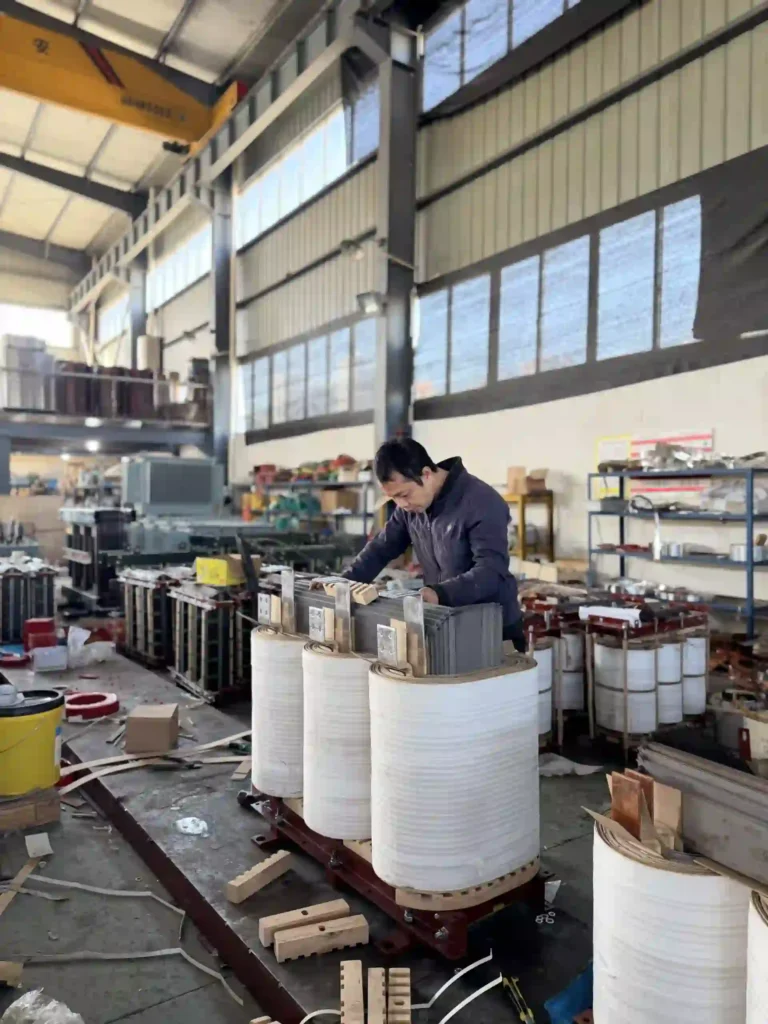
Why Choose Beianelec for High-Quality Step-Up and Step-Down Transformers?
With deflated prices in the step-up and step-down transformer markets, Beianelec has emerged as a trusted partner for suppliers looking for high transformer quality. Beianelec is at the forefront of delivering innovative, reliable, and efficient solutions for the modern power systems of customers worldwide.
- Beianelec is proud to offer a wide list of transformers in its product catalog. This includes oil-filled and dry-type transformers for industrial, transmission, and distribution purposes.
- Global acceptance of Beianelec products is made possible by the safety certification of the products to IEC, ISO 9001, ISO 14001 and CE. This ensures customer peace of mind when they buy transformers from Beianelec.
- Beianelec transformers are engineered with precision to meet specific environmental conditions, load requirements, and voltage levels.
- Quality and performance of Beianelec products are ensured with the use of precision engineering and automated production.
- To maintain the high standards of Beianelec, the company has set forth a rigid criteria for its transformers. This includes factory acceptance tests, type tests, and routine tests. of transformers.
- The low-loss transformer systems developed by Beianelec are designed to improve operational costs and the overall system efficiency.
- With IoT system beacons and SCADA telemetry solutions, real-time predictive maintenance and monitoring is made possible with Beianelec smart transformers.
- Beianelec has a solid global presence and is backed by a devoted support system. The company has been able to extend its supply and support services to over 35 countries.
FAQs
Is step down different from a step up transformer?
Correct, a step-down transformer reduces voltage and increases current; a step-up transformer increases voltage and decreases current. They function through electromagnetic induction but have completely different purposes in power systems.
Which transformer is more efficient, step up or step down?
Neither transformer type is more or less efficient. Efficiency is a function of design, load conditions, and core and copper losses, but the difference between step up and step down transformers is in the function and where to use each of them.
Do step-down transformers increase voltage?
No, step-down transformers do not increase voltage. They decrease voltage, which increases current, and make electricity safer for the end-use applications.
What do step up and down transformers do?
Step-up transformers increase voltage and decrease current. For safe use in homes, industries, and equipment, step-down transformers reduce voltage and increase current.