 Skip to content
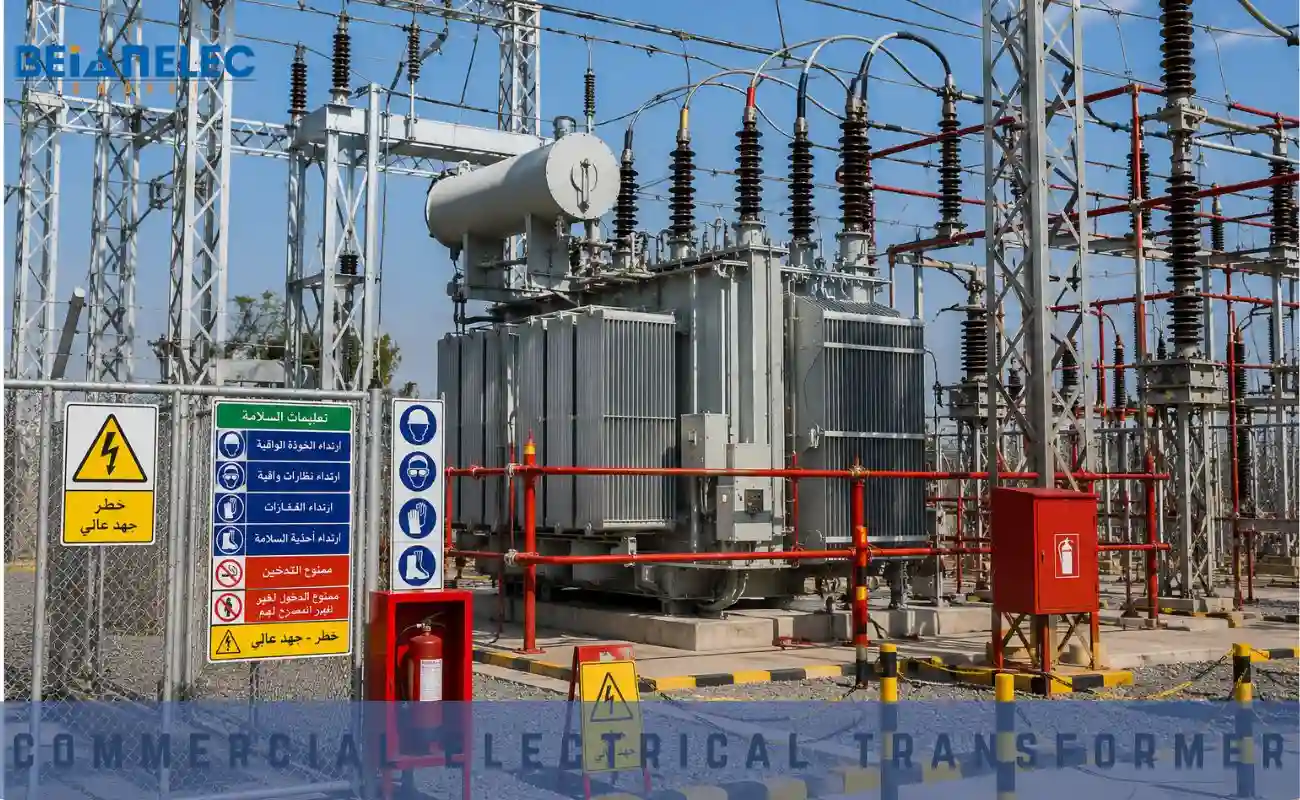
Commercial electrical transformers move electrical energy inside a commercial building or facility. Each system takes care of adjusting the flow of energy for various electrical loads including lighting, HVAC systems, elevators, office equipment, and more. They are a great fit for applications requiring continuous distribution for reliable and highly energy-efficient equipment. Examples include shopping/banking centers, hospitals, hotels, office buildings, and data centers.
What is a commercial electrical transformer ?
Adjusting the voltage levels needed for a circuit relevant to electrical energy is what a commercial electrical transformer accomplishes through the mechanism of electromagnetic induction. Certain types of electrical devices, buildings and facilities, require either a voltage increase or decrease, and a three phase transformer provides for the increase and/or decrease needed. The electrical systems beneath lighting structures, heating and cooling systems, elevators and large office devices.
Commercial transformers are built to improve voltages through the mechanism of continual reliability and efficiency while in constant operation. Elevators, large office devices, and HVAC systems are common devices in large commercial structures, and the safe operation of transformers through constant operation ensures that the needed voltages are maintained and energy losses are minimized.
Read More : How to Choose the Best Cast Resin Transformers Manufacturers
Features of commercial electrical transformer
Electrical transformers for commercial use have several features that help maintain a balance of safety and efficiency for power distribution in commercial buildings and facilities.
- Voltage Control – Helps from the under or over supply of voltage to equipment.
- High Efficiency – There is little to no wastage of energy during the power transfer.
- Thermal Performance – The transformer is manufactured to help combat the build up of excessive heat to allow the transformer to perform continuously without the need of a cooling off period.
- Long-Lasting Insulation – Aiding high operational reliability and safety.
- Low Noise Operation – The low sound it generates suits the transformers to hospitals and offices.
- Overload Performance – The capacity to perform even with temporary augmentations in the power supply.
How to choose a commercial electrical transformer ?
There are many factors that must be followed in choosing 3 phase transformer
- Identify your facility’s electrical voltage requirements: both the level and the range of necessary voltage for transformer input and output.
- Assess your facility’s critical and future electrical demands: Determine load section for the present and future.
- Assess your facility’s electrical system installation site conditions: Determine the range and conditions of the installation site.
- Assess the Efficiency Ratings: Higher Efficiency Ratings lead to lower operating cost and higher immediate and long term cost savings.
- Assess your facility’s compliance with the relevant International Electrotechnical Commission initiation or other relevant international safety standards: Compliance through certification is fundamental to the safety and reliability of electrical power systems for the facility.
Read More : Top Switchgear manufacturers in China
How to choose the best manufacturer of commercial electrical transformer ?
When selecting a commercial transformer manufacturer, reliability, safety, proper functioning, and extended support of commercial electrical systems all must be addressed.
- Evaluation of manufacturers must include years of experience in competing legal commercial transformer markets.
- Evaluation of manufacturers must include lower and upper integration certifications, if applicable, in IEC, IEEE, and ISO markets.
- Evaluation of manufacturers must include empirical methods of developing and executing strict quality control in places of production.
- Evaluation of manufacturers must include the required voltage and capacity adjustment.
- Evaluation of manufacturers must include cost/benefit of reduced energy consumption.
- Evaluation of manufacturers must include the right to an engaged and responsive degree of support after the sale and professional engineering support.
The common voltage ratings for commercial applications
There are customary voltage levels of 3 phase transformer that allow the safety and efficient performance for buildings and equipment applications
- 120/208V: Found in most offices and small commercial buildings.
- 277/480V: Extensively applied for lighting and big HVAC systems.
- 240V: Found for some special equipment and appliances.
- 347/600V: Common for most of the industrial and commercial establishments.
- 11kV or higher: Applicable for medium-voltage commercial power distribution.
Maintenance requirements for commercial electrical transformer
The service of commercial transformers via regular maintenance ensures safe command performance of power distribution systems with extended service life. The following functions improve safety and reliability of ease of service within power distribution systems via functioning of electrical transformers:
- Visual Inspections. The purpose is to find leaks, corrosion, overheating, and broken parts.
- Cleaning. It helps to incorporate better cooling and insulation through removal of dust and debris.
- Connection Tightening. This is done to ensure that connections and terminals are secure.
- Insulation Testing. The purpose is to confirm the insulation resistant electrical integrity.
- Oil Testing. This helps to monitor the oil quality, moisture and dielectric are within limits.
- Thermal monitoring. Enables early detection of abnormal rise of temperature and faults.
Features of Beainelec’s electrical transformer
Beianelec Transformers are internationally recognized for their latest technologies, reliability, and energy-efficient offerings.
- Highly efficient design: Save on operating costs and energy losses by employing transformers designed for optimized efficiency.
- Certified to IEC and ISO standards: All products are designed and built to meet internationally recognized standards for safety and quality.
- Smart monitoring support: All transformers are SCADA ready, monitoring support, and offer capability for predictive maintenance.
- Custom engineering: transformers designed to meet specific voltage and load requirements, as well as environmental concerns.
- Casing and engineering are built to meet our standards, and offer an unusual level of reliability and longevity.
FAQs
What is the difference between a Dry-Type and an Oil-Filled commercial transformer?
A dry-type uses air or resin insulation, while an oil-filled type uses oil for insulation and cooling. The former is safer for indoor use and the latter is preferable for outdoor applications with a higher capacity.
How long does a commercial electrical transformer typically last?
The life expectancy of a commercial electrical transformer is usually about 25-40 years. This is influenced by factors like design, operating and environmental conditions, and maintenance. The life span of the transformer can be extended, notably, by the quality of the maintenance.
