
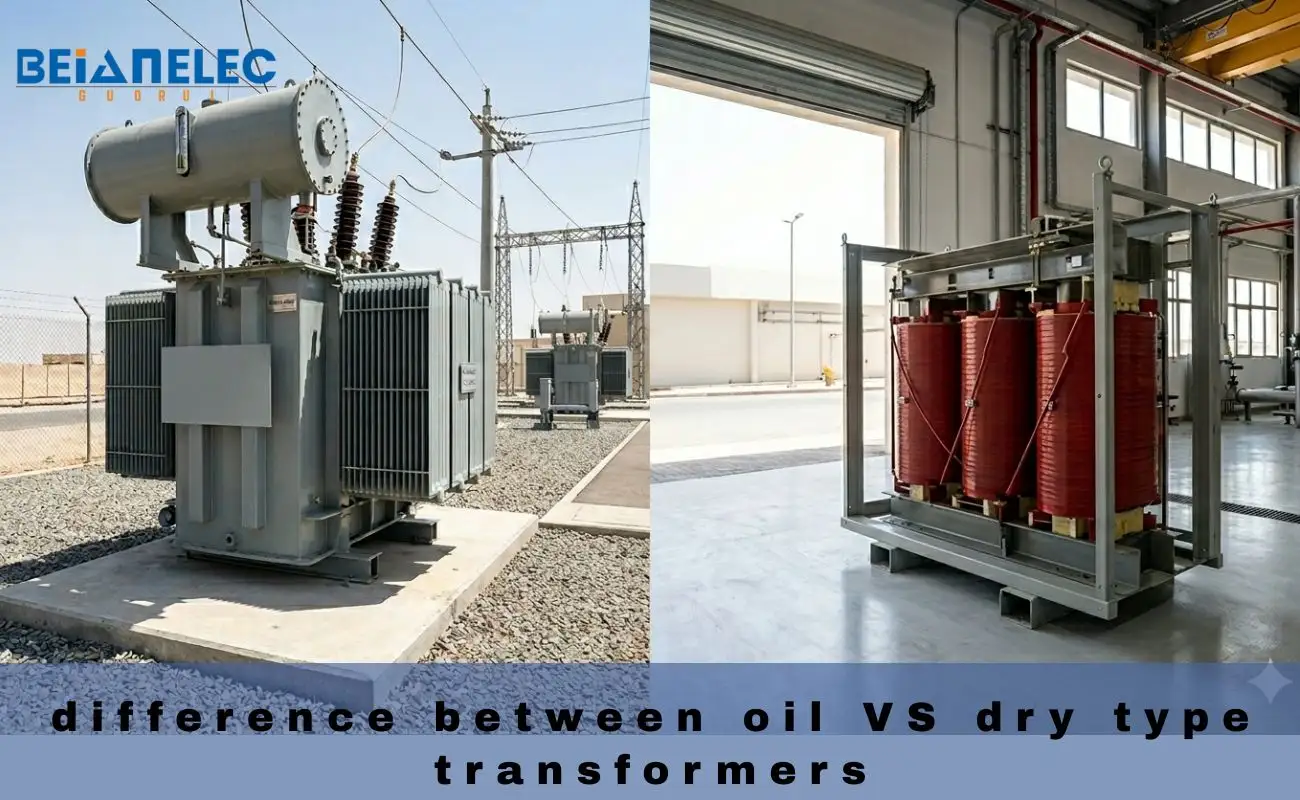
Transformers can be categorized as oil-filled or dry-type based on their cooling methods and insulation, as well as their applications. For instance, oil-filled transformers use insulating oil, and they can be used in high-power applications and in outdoor locations. On the other side, dry-type transformers use air or solid insulation, so they are safer because and not pose an oil leak hazard. They are suitable for indoor and fire-risk environments. In this article, many faces of difference between oil filled and dry type transformers could be explained and how to choose the best type of them.
What Is an Oil-Filled Transformer?
An oil-filled transformer is a type of electrical transformer that utilizes oil for electrical insulation and cooling purposes. The oil dissipates heat generated by the windings and core, while also enhancing the dielectric strength of the transformer. These types of transformers are highly used in the fields of power transmission and distribution because of their strength and efficiency in dealing with high voltages and their strong overload capacity. Generally, these types of transformers are placed outdoors, and they must be sealed and maintained carefully to ensure that oil does not leak out, and to ensure their long service life.
Read More : Top Switchgear manufacturers in China
What Is a Dry-Type Transformer?
An electrical transformer that uses insulation and cooling methods like air, solid, or an equivalent dielectric is known as a dry type transformer. A dry type transformer relies on either natural or forced air flow to dissipate heat. Because of their insulating methods, dry type transformers can be used indoors and therefore can be used in commercial, hospital, or industrial settings. Since dry type transformers are more maintenance-free, safer, and eliminate risks associated with oil leaks they are more suited for safety and environmentally conscious areas.
Key Difference Between Oil Filled and Dry Type Transformers
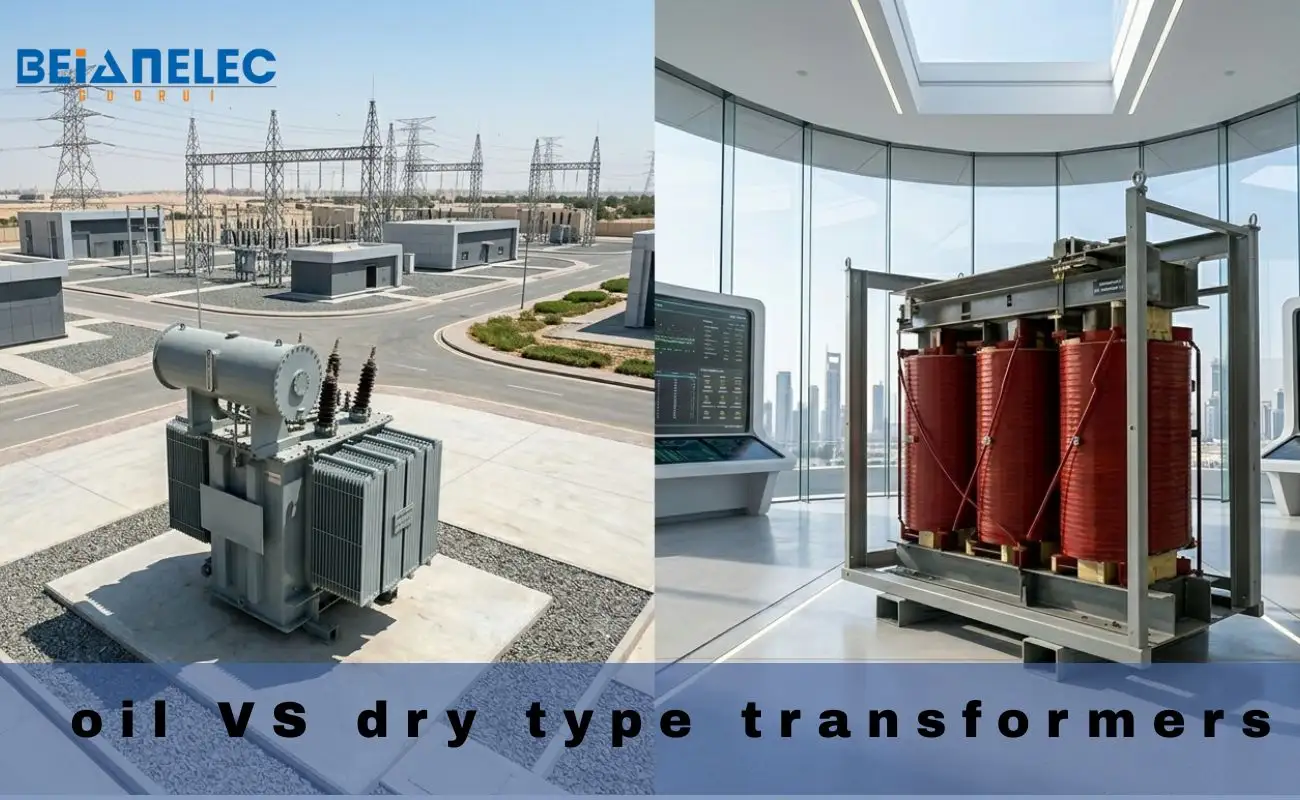
The difference between oil filled and dry type transformers could be summarized in the following table:
| Feature | Oil-Filled Transformer | Dry-Type Transformer |
| Cooling method | Using insulating oil | Uses air or solid insulation |
| Installation | outdoor | Indoor |
| Fire risk | high | Low |
| Maintenance | Periodic checks include oil inspection and gas analysis. | Low maintenance |
| Loading ability | Withstand electrical shocks and increased loads | Not suitable for to sudden or high loads. |
| Environmental Impact | Risk of oil leakage | Eco-friendly |
Read More : Discover the Guide of Transformer Clearance Requirements
Which Transformer Is Better for Your Project Based on Your Needs
It’s important to understand dry-type and oil type transformer difference to select the best type according to your project requirements including the environment, safety, load, and maintenance preferences, leading to a balance between reliability, efficiency, and cost when operating a power system.
- Outdoor use and high power: for high capacity and outdoor use, use oil-filled transformers.
- Safety needs and indoors: dry-type transformers is the best choice.
- Environmental factors: dry-type transformers are environment friendly and harsh areas.
- Installation space: dry-type transformers are suitable for small areas unlike oil-type transformers.
- Financial factors: dry-type and oil type transformer difference also found in costs as oil-filled transformers are usually more expensive for larger power requirements.
When to Use Oil Filled vs Dry Type Transformers
Oil-Filled Transformers:
- Utility substations and high-voltage transmission systems.
- Outdoor locations that have sufficient space and ventilation.
- Major industrial applications with significant load capacity requirements.
- Applications with greater requirements for cooling and overload performance.
- Situations where maintenance teams can control and manage oil inspections and handling.
Dry-Type Transformers:
- installations in buildings, hospitals, and other commercial infrastructures.
- Places where there are high environmental and fire safety regulations.
- Areas that require minimal maintenance.
- Compact spaces where there is limited ventilation.
Industry Standards for Oil Filled and Dry Type Transformers
The difference between oil filled and dry type transformers also appears in the followed standards of production
Oil Transformers:
- Power transformer design testing and performance requirements can be found under IEC 60076.
- Insulation, loading, and operational guides are part of IEEE C57.
- IEC 60296 provides oil and quality insulating oil.
- Different tests are conducted called routine, types and special tests for both electrical and thermal performance.
- Oil environmental and safety standards are set for oil, leakage, fire and workplace protection.
Dry-Type Transformers:
- IEC 60076-11 is dedicated to dry-type transformer specifications.
- The dry-type design and testing are covered by IEEE C57.12.01 and adjacent standards.
- For indoor installations, low flammability and fire safety must be observed.
- Operational safety is governed by standards for thermal class and the insulation system.
- The Environmental regulations on performance ensures the system is safe, eco-friendly and maintenance compliance is low.
Common Mistakes When Choosing Between Oil Filled and Dry Type Transformers
Considering the right transformer type are important and factors when made incorrectly can impact safety, efficiency and long term performance.
- Optimistic application environment: Example, installers use oil-filled transformers in indoor places, or protected from fire transformers in oil-filled fire sensitive areas.
- Overloaded transformer: Example, transformers that cannot meet current or future capacity.
- More monitoring: Example, oil monitoring. Dry type units are assumed to be maintenance-free.
- Neglected installation site: Example, environmental compliance the site does not meet fire safety.
- Short-term focus: Example, initial cost.
- Neglected installation constraints: Example, fitting. Poor space planning.
Why Choose Beianelec for Oil Filled and Dry Type Transformers?
Beianelec could convert the difference between oil filled and dry type transformers into a several options to satisfy clients’ needs and provide them innovative engineering and robust performance for both oil-filled and dry-type transformers.
- Extensive product offering: Provides oil-filled and dry-type transformers for a wide variety of applications including industrial, and renewable energy.
- Compliance with International Standards: All products are IEC, ISO 9001, ISO 14001, and CE certified providing guarantees for quality and safety.
- Tailored Engineering: Custom design of transformers to meet specific value, environmental, and project requirements.
- High quality manufacturing: Automation and precision engineering are used for the best consistent quality and performance.
- Comprehensive testing: To ensure reliability, routine testing and type testing, including factory acceptance testing (FAT), is conducted.
- Design for sustainability: Environmentally friendly transformers with reduced losses and operational efficiency.
- Integratable Smart Monitoring: For predictive maintenance and real time monitoring, SCADA, IoT, and other monitoring solutions are provided.
- Global Support: 35 countries are supplied with products in addition to strong technical support and after-sales service.
- Industry experience: Reliable power solutions engineering and experience coupled with worldwide distribution.
FAQs
Are dry type transformers more expensive than oil filled ones ?
Sure, dry-type transformers typically have a higher purchase price than oil-filled transformers. Dry-type transformers are usually 20 to 30 percent more expensive than oil-filled transformers. This is due to the more advanced insulation materials used in their construction and more complex designs.
What are the risks of oil filled transformers ?
In comparison to dry-type transformers, oil-filled transformers are more likely to pose safety risks. Since oil is used in their construction, the oil can be a f ire hazard, can leak and cause an environmental issue, the oil used for insulation can degrade and safety issues can result if maintenance is not performed and protective devices are not used.
Can oil filled transformers be installed indoors ?
Yes, oil-filled transformers can be used indoors, but in comparison to dry-type transformers there are more risks. Because of these risks, there are a number of safety requirements that need to be met in order to minimize risks. These requirements can include systems to protect against fire, systems to ventilate the area and systems to contain the oil. All of these requirements can be expensive to implement.