 Skip to content
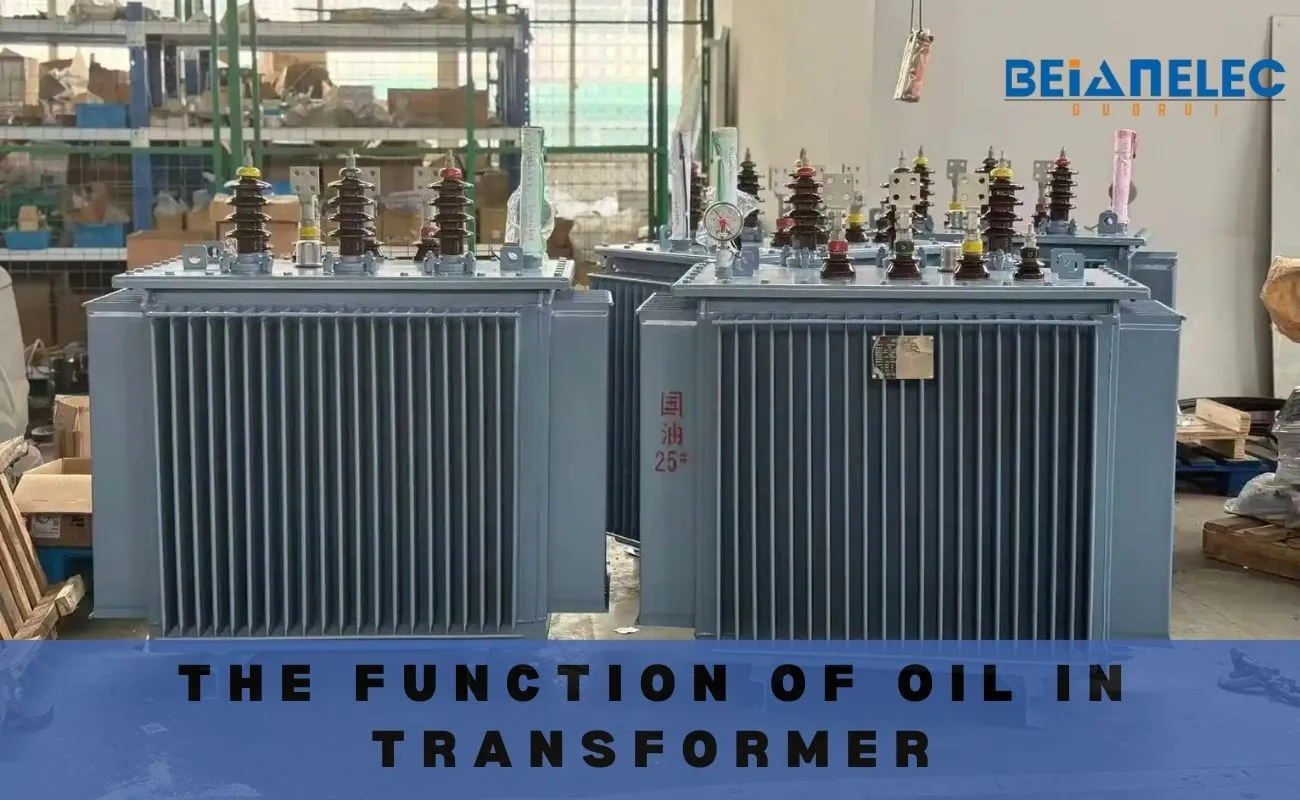
What is oil type transformer?
An oil-type transformer is an electrical transformer that uses insulating oil for cooling and insulation. The purpose of oil in a transformer is to maintain it qualified to be used for better voltage and large load working applications. They are used in industrial applications and utility power distribution systems.
What is the function of oil in transformer?
The function of oil in transformer has many shapes as the following:
- Act as a coolant by absorbing heat. The heat is generated by the windings and core of the transformer. The oil then transfers the heat to the radiators or it can transfer the heat to the air surrounding it.
- Protect the internal parts from oxidation and moisture. Internal moisture can deteriorate the insulation and shorten the life of the transformers.
- Use of oil in a transformer can suppress an arc by quenching the sparks that may occur due to a fault or switching conditions that happen inside the transformer.
- Having a stable temperature is essential for reliability. It helps to ensure that the insulation and temperature don’t change greatly with the load.
- It can also be used for fault detection. The oil may change color or have different gas levels, which indicate overheating or electrical faults.
- The oil used in electric transforme provides insulation from electrical components, reducing the chance of short circuits and dielectric failure when high voltage is present.
- It can also help to keep the oil from overheating. The oil can also keep the insulation from deteriorating. It helps to extend the life of the transformer.
The primary roles of transformer oil
After we know what is the function of oil in transformer, we must ensure that the purpose of transformer oil has many positive results as following:
- Creation of an electrical insulator barrier to the windings and the core, short circuits, and other dielectric problems, so they won’t happen in the future under high voltage stress.
- The oil used in transformer for cooling, absorbing the core and the windings.
- The internal components from moisture, oxidation, and contamination. It significantly reduces the aging of the internal components of the transformer.
- The operational reliability is improved, which suppresses electrical arcs/partial discharge, and keeps the temperature down under load.
- The oil helps engineers monitor the transformer, and helps diagnose issues after oil analysis shows gas, and even contamination.
Regular oil testing extends the life of the transformer
The function of oil in transformer could not be useful without the oil testing to improve the lifespan of the transformer. This allows engineers to monitor the oil’s insulating properties and cooling. By the aid of the following tests:
- Pins down moisture contamination that weakens insulation, increases dielectric losses, accelerates paper aging, and raises the risk of internal short circuits and flashover failures during operation.
- Identifies dissolved gas, due to overheating, arcing, or partial discharge, which helps in early fault diagnosis to avoid minor problems from becoming catastrophic transformer damage and unplanned power outages.
- Keeps track of the oil’s acidity and oxidation levels, which helps in avoiding the occurrence of sludge that obstructs cooling channels, elevates the temperature of operation, and severely diminishes transformer efficiency over extended periods of operation.
- Assesses dielectric strength to assure that the oil is capable of enduring electrical stress, thus preserving the integrity of insulation and minimizing breakdown during peak loads and faults.
- Keeps track of contamination caused by particles and fibers which over prolonged periods of service can bring about localized heating, abrasion of insulation, and uneven dielectric fields within the windings of the transformer.
- Offers predictive maintenance planning by means of trend data, which provides the operators the ability to postpone oil treatment, filtration, or replacement, in anticipation of performance degradation from heavy electrical loading.
- Reduces unexpected outages and repair costs by enabling timely corrective actions, improving system reliability, and ensuring uninterrupted power delivery to critical loads in industrial networks.
- Extends overall transformer lifespan by maintaining optimal oil condition, preserving insulation health, and ensuring stable thermal and electrical performance over decades of continuous service operation.
Find Our Oil Immersed Transformer
The properties of transformer oil
Transformer oil possesses specific physical, chemical and electrical properties are essential for transformer oil and the reliable operation of a transformer. The concept of what is the function of oil in transformer is clear in insulating, cooling, and protecting internal components is determined by the following:
- High dielectric strength which means the oil can withstand strong electric fields. This prevents electrical breakdown, arcing, and insulation failure from occurring inside the transformer during both normal and fault conditions.
- Low moisture content. water decreases dielectric strength and accelerates the breakdown of solid insulation like paper and pressboard.
- Good thermal conductivity which allows heat to be transferred from the windings and core to the cooling surfaces. This heat must be maintained and operated to avoid overheating.
- Proper viscosity which allows for the oil to circulate for effective cooling. This also means that the oil will not create a resistance that would limit heat dissipation at low temperatures.
- Chemical stability which prevents rapid oxidation and the formation of sludge. Also, the formation of acid is a concern which could block the cooling ducts and damage insulation over time.
- High flash and fire points, which reduce the risk for fire and explosion at high temperatures and under fault conditions.
- Low pour point ensures reliable oil flow in cold environments, maintaining consistent cooling performance during low ambient temperatures.
- Minimal gas formation reduces the likelihood of partial discharge and internal faults, contributing to stable electrical performance and extended transformer service life.
How to maintain the quality of the transformer’s oil ?
Understanding the answers of the question what is the function of oil in transformer leads us to keep using advantages of transformer oil by taking possible steps to ensure the quality of transformer oils as stated below:
- Regular testing of the oil should be undertaken to examine the dielectric strength, moisture, acidity, and gas content. This testing will facilitate the early diagnosis of oil degradation and help identify internal faults in the transformer.
- In order to prevent the ingress of moisture, the transformer tank should be sealed properly, and the breather should be functional and have properly conditioned silica gel.
- Water, filter and oxidation byproducts that are suspended in the oil and affect the insulation and cooling performance should be removed.
- To avoid oiling and depressed oxidation, which shortens the life of the transformer, monitor the loading conditions and ensure that the oil is not stagnant.
- When oil that has aged is present, and the acidity and sludge levels are too great, the aged oil must be replaced or regenerated.
- To prevent dust and other contaminants that can be introduced through the seals, the vents, and through other maintenance, keep the transformer clean.
- Use high-quality, approved transformer oil compatible with existing insulation materials to avoid chemical reactions and performance deterioration.
- Keep accurate maintenance records and trend analysis data to support predictive maintenance planning and timely corrective actions.
Why is Beianelec the best transformers manufacturer?
- Now after verifying the truth of what is the function of oil in transformer, we focus on the Beianelec’s strong dedication to quality, innovation, and customer satisfaction makes it stand out as a top transformer manufacturer.
- All transformer product lines are guaranteed to have high precision, consistent quality, and dependable performance thanks to sophisticated manufacturing facilities outfitted with contemporary machinery and automated procedures.
- Strict quality control procedures ensure long-term operational safety and compliance with international standards from raw material inspection to final testing.
- Beianelec’s strong engineering background allows it to create specialized transformer solutions that are suited to particular project needs, load scenarios, and application settings.
- Using premium components and materials improves durability, thermal performance, and electrical efficiency while lowering maintenance requirements and overall lifecycle costs.
- Thorough testing capabilities, such as type and routine tests, guarantee that every transformer performs reliably before shipment and installation
- Professional technical support and responsive after-sales service provide customers with confidence, guidance, and long-term partnership throughout the transformer’s operational life.
At finish, this article about what is the function of oil in transformer should’t be just words, but it is important feature that Beianelec provides to its clients to boost their industry rapidly.
Frequently Asked Questions
+
Transformers need oil to provide effective insulation and cooling for internal components. The oil absorbs heat generated by the core and windings and dissipates it to the surroundings, preventing overheating.
+
If a transformer runs out of oil, it loses insulation and cooling, causing overheating, insulation failure, electrical arcing, and potentially catastrophic damage or complete transformer failure.
+
The parameters of transformer oil quality include dielectric strength, moisture content, acidity, flash and fire points, viscosity, and dissolved gas content, which determine its performance.
